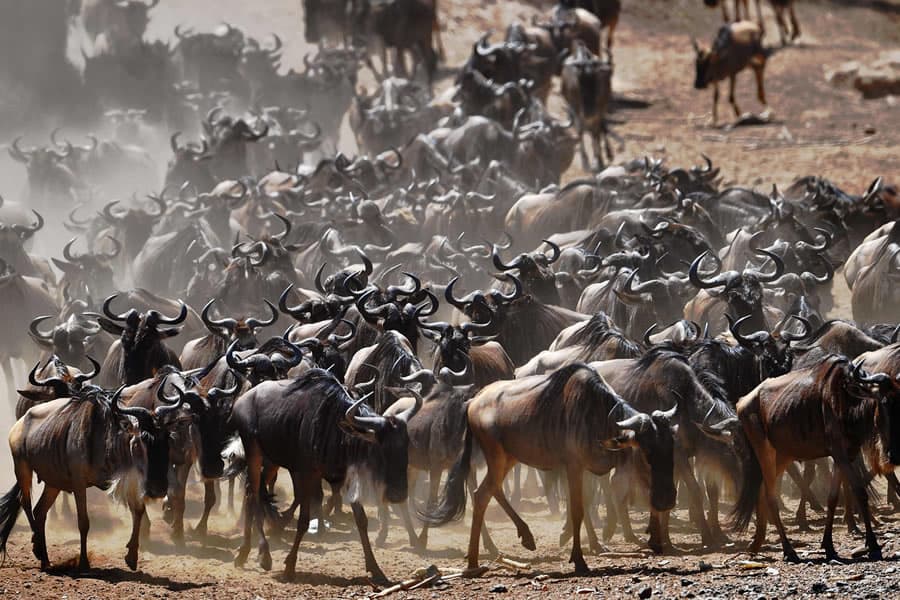
The Great Migration is a living system, not a scheduled show. A better Mara trip begins by choosing the landscape and guiding style you want, then treating any river crossing as a possibility rather than a promise.
Choose a season, not a prediction
Migration timing shifts with rain and grass. July through October is the familiar window for large herds in the Mara, but exact crossings cannot be guaranteed. January and February can bring clearer skies and fewer vehicles, while the green seasons reward birding, dramatic light, and better value.
A good guide reads the land you have today, not the wildlife clip you saw online last year.
Reserve or conservancy?
The national reserve offers classic open plains and access to well-known crossing points. Community conservancies often limit vehicle numbers, allow night drives or guided walks, and route a larger share of tourism income through local land partnerships. Many strong itineraries split time between both.
The guide changes the safari
Ask how your guide handles crowded sightings, how long they have worked in the ecosystem, and whether the operator follows vehicle-distance rules. The best guides know when to leave a cluster of vans and look for quieter behavior elsewhere.
- Stay at least three nights; rushed one-night safaris spend too much time entering and leaving.
- Pack a warm layer for dawn drives, even when the afternoon is hot.
- Pair the Mara with Nairobi culture or the coast instead of adding another near-identical safari stop.