The guidebooks give you the dates. They rarely tell you what to do with the weight of these rooms once you have stood inside them. This is the two-day itinerary we share with friends who want to visit carefully, slowly, and with a local guide.
Why these castles still matter
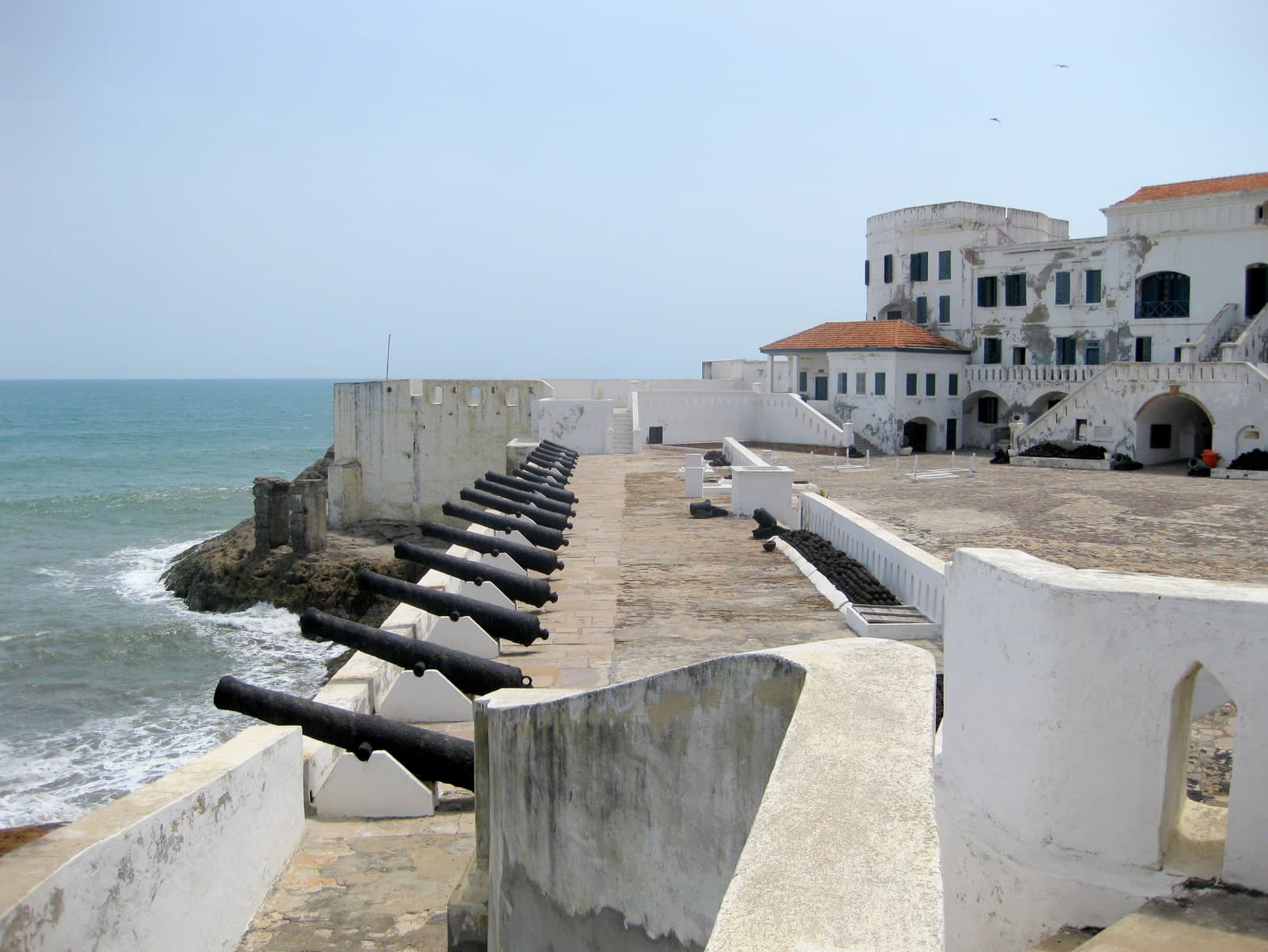
About forty European-era forts line Ghana’s coast. Cape Coast and Elmina are UNESCO World Heritage sites, but that label can make the history sound distant. These were working rooms in the logistics of the transatlantic slave trade: places of confinement, accounting, violence, and forced departure.
Standing inside them brings the geography of the Middle Passage close. For travelers with roots in the African diaspora, the visit can be intensely personal. For everyone, it asks for unhurried attention and respect.
Do not pack this into a half-day before the beach. You can. You should not.
Prepare before you arrive
Give yourself enough sleep, eat before the tour, and choose your company carefully. Going alone is possible; going with someone you trust can help. Large, noisy groups make it harder to be present.
- Read a little history before the drive so the museum objects and rooms have context.
- Allow at least two hours for each castle and the museum; do not race the official guide.
- Bring small cedi notes for food, water, and local vendors, but keep photography restrained in the dungeons.
- Plan an overnight stay rather than a tired late drive back to Accra.
Day 1: Cape Coast Castle and Brenu Beach
Leave Accra early and aim to reach Cape Coast before lunch. Start in the museum, where ledgers, oral histories, photographs, and recovered objects establish the context the architecture alone cannot provide. Then join an official castle guide through the dungeons, courtyard, chapel, and Door of No Return.
Afterward, choose a quiet lunch in town and leave the afternoon deliberately loose. Drive west to Brenu Beach for a swim, grilled fish, sunset, and an early night. The coast is not an afterthought here; it gives the day somewhere to settle.
Day 2: Elmina at dawn, then Kakum
Reach Elmina’s fishing harbor around daybreak. Painted pirogues launch below the castle walls while the market gathers along the inlet. Watch without turning a working harbor into a performance for your camera.
Tour Elmina Castle after breakfast. Its 1482 Portuguese foundations and more enclosed architecture give it a different physical weight from Cape Coast. From there, drive north to Kakum National Park. The canopy walkway — air, movement, forest, height — is a purposeful change of register after two days inside stone rooms.
Eat what Cape Coast eats
Fante kenkey is fermented corn dough wrapped in cornhusks and steamed, then served with fried fish, pepper sauce, and onion. Look for busy morning stalls near Cape Coast and Elmina rather than a polished menu built for visitors. Ask your guide where they ate this week, order what is fresh, and round up instead of bargaining over a small margin.
Mistakes to avoid
- Do not squeeze both castles and Kakum into one rushed day.
- Do not take selfies in the dungeons or interrupt the guide for staged photographs.
- Do not skip the museums; the building without the records loses much of its meaning.
- Do not drive the Winneba–Mankessim road exhausted after dark. Stay over or use a trusted driver.
After the castles
If you have time, keep moving west toward Busua and Cape Three Points. The pace softens into surf villages, fishing mornings, and long stretches of palm coast. After the castles, many travelers need somewhere quiet to land. Ghana’s coast knows how to provide it.